

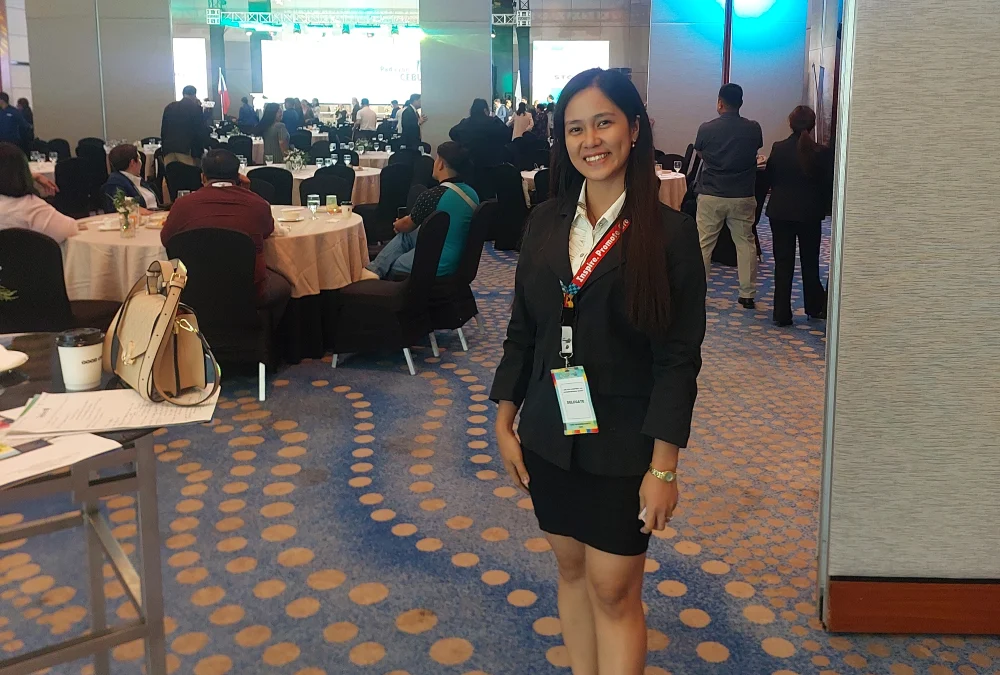
When we were informed on short notice who would be attending Cebu Business Month 2026 on behalf of the company, I hesitated at first.
As a web developer, attending a gathering filled with business owners, entrepreneurs, investors, and industry leaders was far outside my usual environment. I wasn’t sure what to expect—or even what to wear. Business conferences were something I had mostly seen in movies or heard about from others.
Still, I believe in taking opportunities when they come. One perspective I try to live by is to “strike the iron while it’s still hot.” Even though I felt uncertain, I saw the event as a chance to learn something new and step outside my comfort zone.
Looking back, I’m glad I did. What I initially thought would simply be a business gathering turned out to be an eye-opening experience that gave me valuable insights into leadership, entrepreneurship, innovation, and the realities of building a successful business.
Listening to the speakers gave me a deeper appreciation for the challenges entrepreneurs face every day. Behind every successful company are countless decisions, risks, failures, and moments of uncertainty that are often invisible to outsiders.
The experience opened my eyes to the reality that building a business is never easy. It requires resilience, patience, strategic thinking, and the ability to adapt in a constantly changing environment.
Another topic that stood out to me was Artificial Intelligence (AI). I had actually been working on a blog prior to the event titled “One Click to Destroy a Career?”, and the discussions gave me a deeper understanding of how business leaders view AI and its role in today’s world.
As someone working in the technology field, I was especially interested in hearing how entrepreneurs perceive AI. Rather than seeing it as a replacement for people, many business leaders described it as a tool—much like a calculator. It can process information, generate ideas, and improve efficiency, but human judgment remains essential.
AI can support decision-making, but it cannot replace experience, values, intuition, accountability, or leadership. Humans are still responsible for interpreting information, making final decisions, and understanding the broader context behind every situation.
This perspective reinforced an important lesson: technology should empower people, not replace them.
Leadership Begins with Thinking
One of the most memorable takeaways was the importance of coming prepared to leadership and business meetings. During discussions, leaders are expected to contribute ideas, identify issues, and propose solutions. If you do not have thoughts or insights to share, it signals a lack of engagement and strategic thinking.
Strong leaders do not simply attend meetings—they actively participate in shaping outcomes.
Understanding the Bigger Challenges Facing Our Economy
Stephen CuUnjieng (Independent Director, MAHARLIKA INVESTMENT CORP. | APPLEONE Group) highlighted several long-term challenges facing the Philippines, including:
- Infrastructure development
- Food security
- Limited manufacturing capabilities
- The need to continuously educate and develop employees
- Short-term crisis planning for industries such as agriculture, mining, and tourism
- Long-term economic sustainability through stronger manufacturing sectors
These challenges serve as reminders that business success is connected to broader economic development. Organizations must not only focus on their own growth but also contribute to strengthening the industries and communities around them.
One statement that resonated deeply was:
“If you want to go fast, go alone. If you want to go big, go together.”
Sustainable growth is rarely achieved in isolation. Collaboration, partnerships, and shared visions are often what allow businesses to scale successfully.
The Power of Pause
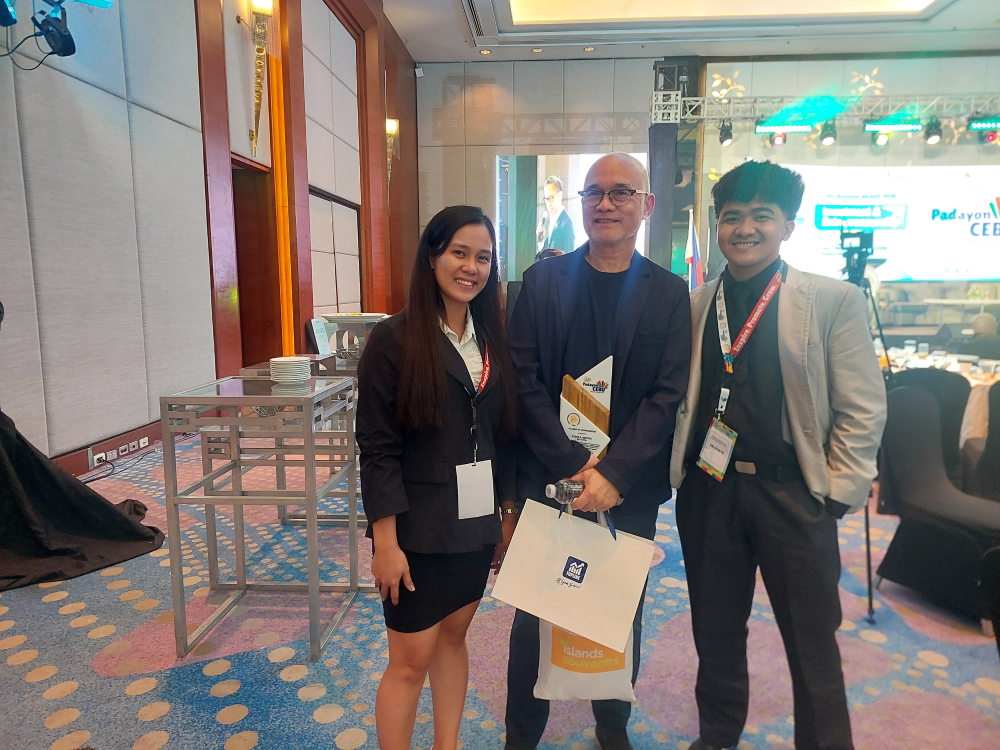
Steve Benitez, CEO of Bo’s Coffee, shared lessons that were both practical and inspiring.
One of his most powerful insights was the importance of pausing.
Businesses often focus heavily on the customer-facing side of operations—the frontend. However, when challenges arise, the root cause may exist behind the scenes in processes, systems, or operational workflows.
Before rushing into solutions, leaders should take time to understand the real problem.
Fall in Love with the Problem, Not the Solution
Many entrepreneurs become attached to their ideas and proposed solutions. However, Steve Benitez emphasized that this mindset can become dangerous when ego gets involved.
Instead, businesses should focus on understanding the problem deeply. The better we understand the problem, the better equipped we are to create meaningful and effective solutions.
Growth begins when we replace assumptions with curiosity.
Entrepreneurship Is Never a Straight Line
Business growth rarely follows a perfect path.
There will be setbacks, unexpected challenges, and periods of uncertainty. Being a small business is not necessarily a disadvantage—it can be a strength.
Smaller organizations often have greater flexibility, adaptability, and closer relationships with customers.
Every successful business starts somewhere. The key is to start simple, stay committed, and continue learning.
The Importance of Humility and Listening
One lesson that strongly resonated with me was the value of genuine listening.
Ego can prevent leaders from seeing reality clearly. When leaders stop listening, they stop learning.
Humility creates space for growth. Listening with genuine intent allows organizations to better understand employees, customers, and stakeholders.
As leaders, our responsibility is not to have all the answers—it is to continuously seek understanding.
Community Is a Competitive Advantage

No entrepreneur succeeds alone.
Behind every successful business is a community of people who believe in its mission and vision.
Employees, customers, partners, mentors, and supporters all contribute to a company’s success. Building trust and nurturing relationships should never be viewed as secondary priorities.
Community is not just support—it is strength.
Playing the Infinite Game
Drawing inspiration from Simon Sinek’s concept of the “Infinite Game,” Steve Benitez challenged entrepreneurs to rethink success.
Many businesses become obsessed with beating competitors or achieving short-term wins. However, business is not a finite game with a clear finish line.
The goal is not simply to win today.
The goal is to remain relevant, continue creating value, and stay in the game for the long term.
The longer an organization stays committed to its purpose, the greater its potential impact.
Master Your Core Before Expanding
Expansion can be exciting, but diversification should not come at the expense of a strong foundation.
Before entering new markets or launching new products, businesses should first master their core operations.
A business that cannot operate effectively without constant owner involvement may not yet be ready to scale.
Growth should be built on stability, not urgency.
Expansion Requires Local Understanding
Another valuable reminder was that success in one location does not guarantee success elsewhere.
What works in Cebu may not automatically work in Manila or other regions.
Every market has unique customers, competitors, cultures, and expectations. Expansion requires research, patience, and a commitment to building trust over time.
Location, customer behavior, competition, and timing all matter.
Purpose Fuels Endurance
Perhaps the most inspiring takeaway from the event was the reminder to always remember why we started.
Business journeys are emotional. There will be moments when challenges, setbacks, and uncertainty pull us away from our goals.
Purpose provides direction during those moments.
Entrepreneurship is not simply about ambition. It is about resilience, endurance, and consistency. The invisible moments—the sacrifices, lessons, and perseverance—often shape success more than the visible achievements.
Final Thoughts
Cebu Business Month 2026 was more than just a business event—it was a learning experience that challenged my perspective.
Good leaders build good organizations. Good organizations build strong communities. Strong communities build a better country.
I left the event with a deeper appreciation for entrepreneurship, leadership, and the complexity of building something meaningful. More importantly, I left with a reminder that growth—whether personal or professional—comes from continuous learning, humility, and the willingness to understand beyond what is familiar.
As I continue my journey as a web developer, these lessons will stay with me, shaping how I think, build, and contribute to the businesses I work with in the future.