

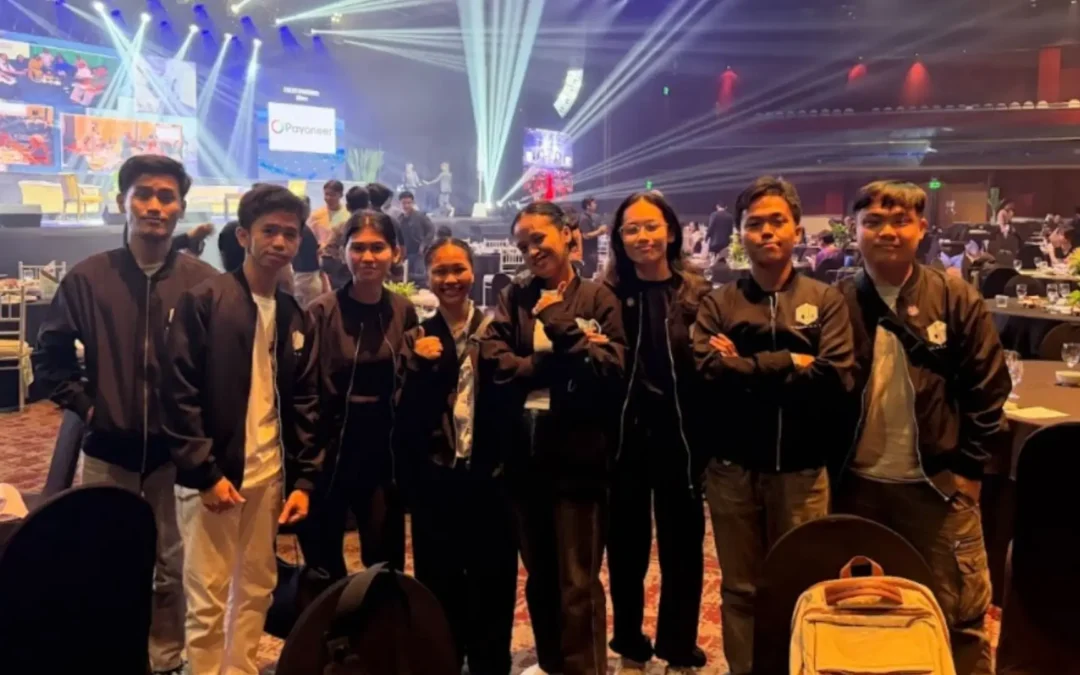
When we first arrived at the CBM 2026 Technology & Innovation Forum, I honestly thought I already knew what to expect.
As students who have attended different seminars and conferences before, we assumed this would be another event with speakers, presentations, and networking. But as the day continued, it became clear that this experience would become something much more meaningful than we expected.
With the theme “Future Ready Philippines: Navigating AI, Industry Disruption, and the Skills Revolution,” the forum brought together professionals, innovators, educators, business leaders, and students to discuss how technology continues to shape the future.
Before the sessions officially began, one moment already changed my perspective.
Ms. Joslyn Canon, Chairman of CBM 2026 Digital Transformation & Technology, approached our table and said:
“This event is not usually accessible by students, so take advantage of it.”
That statement stayed with me for the rest of the day.
Instead of simply attending, we became intentional in listening, observing, taking notes, and learning from every speaker.
A Question That Opened the Entire Forum
During the welcome remarks by Regan Rex King, President of the Cebu Chamber of Commerce and Industry, one phrase immediately captured my attention:
“Can we keep up with the speed of technology?”
That question became the perfect opening for the entire forum.
Technology continues to move faster than ever. AI, automation, digital transformation, and innovations continue to change industries every day.
But this discussion did not create fear.
Instead, it challenged us to shift our mindset.
Keeping up with technology does not mean mastering everything. It means remaining adaptable, continuing to learn, and staying open to change.
As a student, I was reminded that preparing for the future starts before entering the workforce—it starts with how we choose to learn today.
The New Intelligence Economy
The opening keynote delivered by Dr. Donald Patrick Lim, Chief Operating Officer of DITO CME Holdings Corporation, became one of the most memorable sessions for me.
His discussion, “The New Intelligence Economy: Global Shifts in the Age of AI,” focused on how artificial intelligence is reshaping economies, industries, and opportunities.
What I appreciated most was how he explained the future in a simple way.
He presented situations where people may have access to the same advanced technologies, but their outcomes become different because of the decisions they make.
One statement stood out the most:
“Don’t compete with AI.”
That line completely changed how I viewed technological advancement.
Rather than treating AI as competition, we should understand how to work with it and use it as a tool to improve productivity and create opportunities.
Another message I appreciated was that innovation should never remove identity and values.
Technology evolves, but people still create meaning behind it.
Rewiring Education Before AI Rewires Society
The next session that stood out to me was the Policy Panel on Education & Skills: Rewiring Education: Bridging Policy Gaps in the Age of AI.
The panel featured leaders from education and government, including representatives from DepEd and TESDA.
This discussion became one of my favorite parts of the forum because it showed that preparing for the future requires collaboration.
Schools, businesses, and government institutions cannot work separately anymore.
Educational systems must evolve together with industry needs.
As a student, one insight that stayed with me was that AI should not be viewed as a threat but as an opportunity to redesign learning and prepare future professionals more effectively.
My biggest takeaway:
The future belongs not only to those who have access to technology, but to those willing to adapt.
Excellence Does Not Happen Overnight
Another discussion that inspired me was Case Study 1: Local Academe, presented by Engr. Bernard Villamor, President of Cebu Institute of Technology – University.
He discussed how educational institutions continue translating national educational frameworks into meaningful action.
What stood out to me was how he showcased the journey of achieving success nationally and globally.
His message reminded me that excellence does not happen overnight.
Behind every achievement are years of hard work, consistency, trust, and continuous improvement.
As students, this became an important reminder that growth takes time and our capabilities should never be limited by where we currently are.
To AI or Not to AI
One of the sessions I enjoyed the most was Ryan Tan Yu’s discussion:
“To AI or not to AI: From Buzzword and Insights to Impact.”
This session connected well with the earlier conversations about technology.
His message reinforced something powerful:
Technology should not intimidate us.
One line that made a strong impact was:
“Don’t compete with AI, drive it.”
I appreciated how practical his message felt.
AI should not replace human thinking.
Instead, it should become something we learn to maximize and integrate into our work and future careers.
Innovation Beyond Technology
Later in the day, the Startup & SME Panel: Building Prosperity Through Innovation became another memorable experience.
The panel featured inspiring women leaders, including Esna Ong and Erika Dell Sancho, moderated by April Ong Vaño.
Listening to their experiences made me realize that innovation is not always about creating new technology.
Sometimes innovation means solving problems, creating opportunities, and making meaningful contributions.
One insight that stayed with me came from Ms. Esna Ong, who emphasized that interns should not be limited to basic tasks because students are capable of doing more when given responsibility.
As an intern, this message was personal.
Growth happens when people trust us enough to contribute.
Sometimes students are more capable than we think—we simply need opportunities.
More Than Just Another Event
As the forum came to an end, I realized that this experience was different from what we initially expected.
We thought we were attending another seminar.
Instead, we left carrying lessons.
We interacted with professionals and business-minded individuals behind successful organizations.
We listened to conversations that are already shaping the future.
And more importantly, we realized that students belong in these spaces too.
Looking back, I am truly grateful that we listened to Ms. Joslyn Canon’s advice and maximized the opportunity.
If she had not reminded us how rare this experience was for students, we might not have appreciated it the same way.
The CBM 2026 Technology & Innovation Forum became more than an event.
It became a reminder that preparing for the future starts now.
And as students, staying curious, remaining open to change, and taking opportunities seriously may become the first step toward becoming future-ready.