

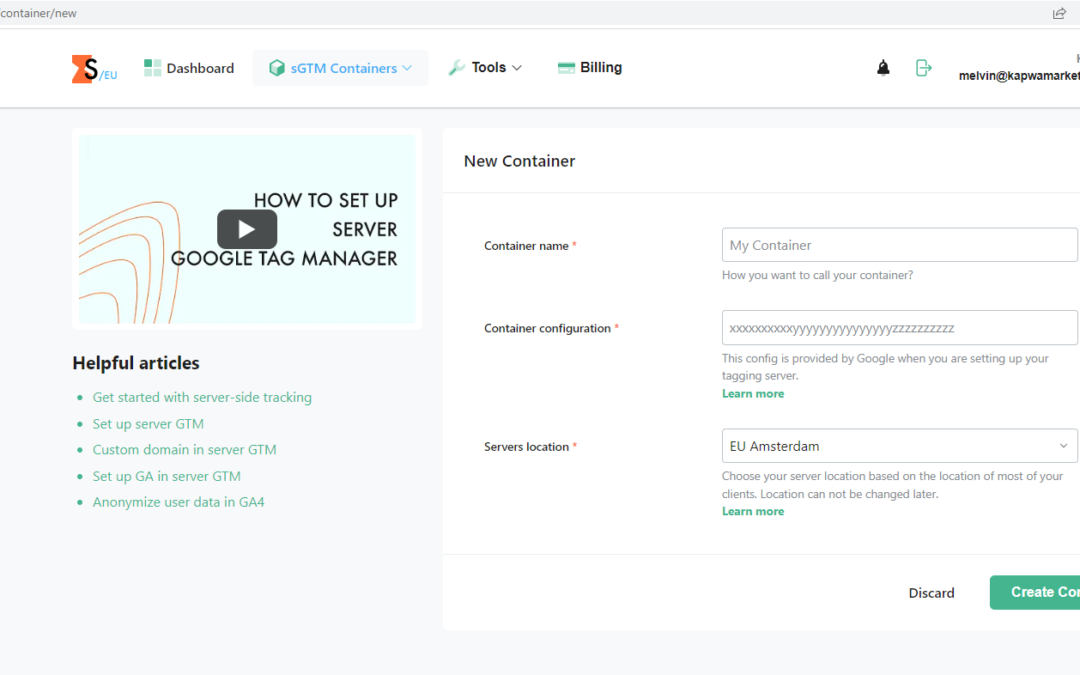
Everyone who runs an online business sooner or later starts thinking about using a GTM server container. It is a trendy thing nowadays, with many experts and websites claiming that without it, any online business has no bright future. Generally, they are right, but why? What makes server containers so special and useful for online entrepreneurs, and why is it hard to imagine the online marketing and e-commerce future without them? If such questions swarm in your head, and the idea of switching to a server version of the GTM container strengthens daily, this article is for you.
The Concept of a GTM Container
First things first, let’s discuss what a GTM container is used for. It can be compared to a toolbox, where many instruments needed to track the client data are stored. To make it short, we would highlight 3 main tasks of a Google Tag Manager container:
- to manage all the tags used to track the clients’ behaviour across different ad platforms – TikTok, Facebook, and others;
- to configure triggers that define when and which tags are supposed to be fired;
- to create and store the variables often used for sending more accurate data to analytics and ad platforms.
There are two types of containers: web ones, hosted inside Google infrastructure, and server ones, hosted, guess what, on a server. Both are conceptually different, and the latter is considered to be a more modern and reliable solution.
| Web container | Server container |
|---|---|
 |
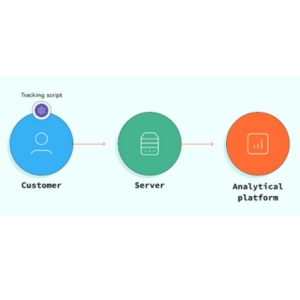 |
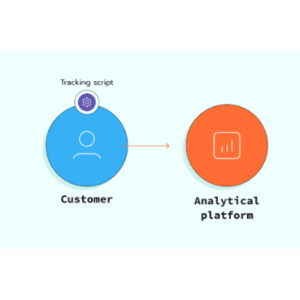
| Relies on the tags and script that fire on the client’s side, meaning that the data is sent to analytics directly from the browser. | All the tracked data is sent to the server first, where it is preprocessed before being sent to analytics. |
| Are not compliant with any of the privacy policies, as all the data is sent to third-party platforms in its original shape and content. | Allows the creation of a tracking setup compliant with GDPR, CCPA, HIPAA, and other actual privacy policies. |
Obviously, there are more differences, but we highlighted only the main ones that can significantly impact any online business. Now, what does this mean for any business owner?
Practical benefits of a server GTM container
It is always good to have a formal list of the benefits or advantages of one method over another, but how does switching to a server GTM container help a business in practice? There are several important aspects where a drastic improvement is expected.
1. Better ROAS and POAS
These are the main metrics markets are focused on. They need to understand how profitable the campaigns they launch are and if there is any practical sense in spending the budget on certain ones. Switching to GTM server-side tagging provides businesses with a more clear and precise data about their customers, which leads to the following improvements:
- the conversion data captured is more accurate and complete, leading to better insights on how successful different campaigns are;
- ad platforms (Instagram, Pinterest, TikTok, Facebook, etc.) have algorithms that optimize the campaigns automatically depending on the received data, which work better when the data quality is higher;
- audience targeting becomes better when there is a server involved in the data tracking process, allowing businesses to focus on the clients who are more likely to interact with their ads.
All these things lead to higher ROAS (“return on ad spend”) and POAS (“profit on ad spend”) numbers, which is a great signal for any company (if these numbers and the increase in them are real, of course).
2. Customer privacy in the first place
Privacy policies are always on the customer’s side in the customer-business relationships, and it is vital to consider all the legal aspects and nuances, not to get into legal trouble. There is a strict rule that private information is not allowed to be shared with third parties without the customer’s consent, and even when they give it, a good idea is to be very careful with such data.
When using a web GTM container, information privacy does not exist, as all the data is sent from the browser directly to the analytics platforms (which are considered third-party in this context). This is fraught with legal claims, and this is one of the last things any successful business wants.
Using a server GTM, you are safe on this side, as all the private data stays on the server, which is not considered a third party, and you can share with the analytics platforms only the information they need to operate.
3. Future-proof infrastructure
Browsers constantly work on improving the users’ experience and security. They have already implemented security protocols that interfere with tracking, cut the cookie lifetime, and no one knows what will be done next. However, if the browser’s role in data tracking is minimized, there is no need to bother with the forecasts and expectations.
Using a server GTM allows businesses to stay mostly independent from any novelties browser developers may get in their heads (for instance, ad blockers, Safari’s ITP and its analogues, etc.), as all the crucial operations take place on the server, not in the customer’s internet client. Of course, it is impossible to predict what will happen in the future, but for now, the main expectation is that those sticking to server infrastructure suffer from changes in browsers the least, and there are no signs that it will change.
Conclusion
We are sure that soon, businesses that do not use a GTM server container will either change their mind or disappear. Analyzing the clients’ behaviour and planning future development is impossible without detailed customer data, and the quality of the data provided by a server-side tracking setup drastically excels that gathered on the client’s side. Thus, if you still haven’t done that, our recommendation is to reconsider your views and try using a server GTM. We are sure you will notice changes quickly enough, never to return to the old approaches.